Few questions in the world of flowers have a clearer default answer, and yet the full picture is more interesting than a single stem. Red roses have held the title of flower of romance for centuries, backed by mythology, poetry, and a cultural shorthand that spans continents. But tulips, peonies, orchids, and lilies all carry their own romantic weight, and choosing the right bloom for the moment depends on what you want to say. Here is what each flower means and how to use that meaning well.
What Flowers Are Considered the True Flower of Romance?
The question has a straightforward answer and a richer one beneath it. Red roses are the consensus pick, and the reasoning behind that matters for anyone choosing flowers with intention.
Red Roses Are the Classic Answer
Red roses have meant romantic love since at least ancient Rome, where they were associated with Venus, the goddess of love. That association carried through medieval poetry, Victorian floriography, and into modern gifting culture without losing any of its force. When someone receives red roses, the message lands immediately and without ambiguity.
What Makes a Flower “Romantic”
Romantic flowers tend to share a few common traits:
- Visually striking appearance that commands attention
- An established symbolic meaning tied to love or devotion
- History of use in courtship, partnership, or romantic occasions
- Fragrance: scented flowers trigger memory and emotion in ways scentless blooms do not
Symbolism Shapes the Answer
Different cultures have assigned romantic meanings to different flowers across history, but red roses occupy the most consistent position globally. Red as a color is tied to passion and urgency, and the rose’s structure (layered petals, thorns) has long been read as a metaphor for love itself. That layered meaning is part of what gives red roses staying power.
Red Roses Still Lead Over Other Blooms
Competing flowers have advocates, and some carry meanings that suit certain relationships better. But no other bloom has the same cross-cultural recognition, the same immediate legibility, or the same reliable emotional landing. For a first romantic gesture or a high-stakes occasion, red roses remain the default for good reason.
Flowers Often Linked to Romance
These four blooms are the most frequently cited alternatives to red roses in romantic contexts, each with a distinct meaning that suits a specific kind of love.
1. Tulips for Perfect or Enduring Love
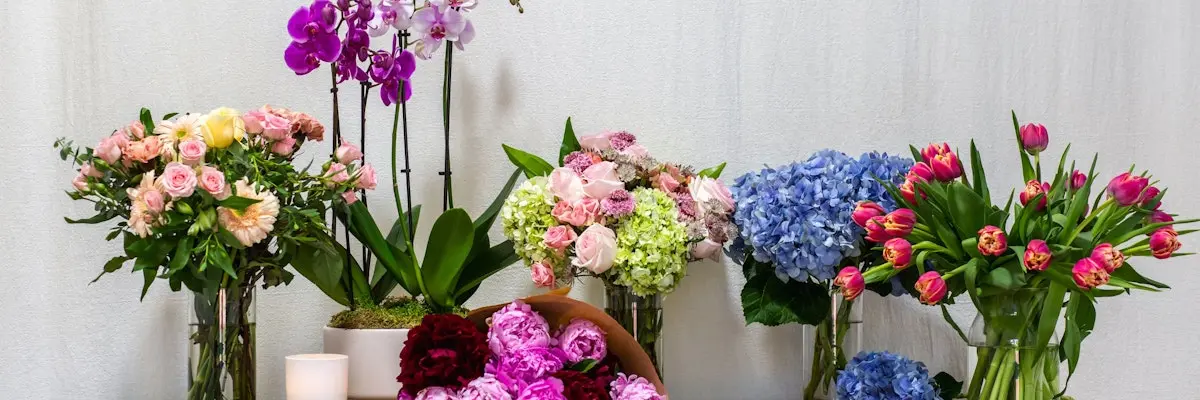
Red tulips are associated with deep, steady devotion, the kind of love that has settled into something lasting. They suit long-term relationships and anniversaries better than new courtship. The message they send:
- Certainty rather than infatuation
- Devotion that is settled and sure
- Love that has grown rather than just begun
2. Peonies for Romance and Happy Marriage
Peonies are associated with romance in its warmest, most abundant form.
- In Chinese culture, they represent good fortune and happy marriage.
- In Western floriography, they carry meanings of prosperity, beauty, and romance.
Their full, lush shape reinforces the sense of abundance, making them a natural fit for engagements, anniversaries, and celebrations of a relationship that is going well.
3. Orchids for Elegance and Exotic Love
Orchids sit at the more sophisticated end of romantic flower symbolism. They are associated with rare beauty, refinement, and a love that is more complex and considered than the immediate passion of red roses. Giving orchids signals that the giver sees the recipient as someone exceptional, distinctive rather than merely beautiful. They suit relationships where the connection feels deep and specific.
4. Lilies for Purity and Devotion
White lilies carry meanings of purity and devotion, making them a romantic choice when the emphasis is on commitment and fidelity rather than desire. In wedding traditions, they represent a love that is both pure and enduring. Stargazer lilies shift the meaning toward admiration and aspiration; the choice of lily type matters in a romantic context.
Why Red Roses Stand Out
Three things separate red roses from every other romantic flower, and they all come down to how the flower communicates.
Strong Association With Passion and Desire
Red is the color most consistently associated with strong emotion across cultures. Roses bring a physical structure that reinforces the feeling: full, layered petals, immediate beauty, and a fragrance that lingers. The combination makes red roses the most emotionally direct flower available; no interpretive work required.
Long History in Love and Wedding Traditions
Red roses have appeared in:
- Love poetry since Sappho
- Wedding traditions across Europe and the Americas
- Valentine’s Day iconography since it became a widely celebrated occasion
That historical weight means red roses carry cultural memory as well as personal meaning. Receiving them connects the moment to a long tradition of romantic expression.
Red Roses Remain the Safest Romantic Choice
For any romantic gesture where the giver is uncertain how their feelings will land, red roses minimize the risk of misreading. The message is clear enough that no explanation is needed, but conventional enough that it does not feel presumptuous. That balance makes them the default for early courtship and high-stakes moments alike.
Other Romantic Flower Meanings
Not every romantic moment calls for the same statement. These alternatives suit specific shades of feeling that red roses may not capture with the same precision.
Pink Roses for Admiration and Affection
Pink roses occupy the space between friendship and romantic love. They communicate admiration, warmth, and affection without the full weight of red:
- Light pink: Sweetness and gentle appreciation
- Deep pink: Gratitude, recognition, and warm affection
- Blush: A softer romantic tone that suits early relationships
For reconnections or gestures that want to be warm without being overwhelming, pink roses are often the more appropriate pick.
White Flowers for Purity and Commitment
White flowers, including roses, lilies, ranunculus, and sweet peas, carry meanings of purity, sincerity, and new beginnings. In a romantic context, they suit wedding days and anniversaries, moments where the emphasis is on commitment and shared future. White arrangements read as elegant and considered, which suits partners who respond to restraint over intensity.
Wildflowers for Softer Romantic Meaning
Wildflowers carry a romantic meaning of a different kind: natural, unforced, and specific to the person rather than the occasion. Choosing wildflowers for a romantic gift signals that the giver paid attention to who the recipient is rather than reaching for a conventional choice. For someone who values personality over tradition, a thoughtfully assembled wildflower arrangement lands more meaningfully than a dozen red roses.
FAQs
What is the most romantic flower?
Red roses are the most romantic flower of all time. They carry the clearest, most universally recognized association with romantic love and have held that position across cultures and centuries. Peonies, tulips, and orchids are strong alternatives when the relationship calls for a more specific message.
Are red roses always the flower of love?
They are the strongest default, but not the only option. Tulips signal enduring devotion, peonies suggest a flourishing partnership, and orchids communicate a rarer, more considered kind of love. The best choice depends on what the relationship calls for.
Which flowers symbolize true love?
Red roses most directly. Red tulips, deep pink peonies, and white lilies also carry meanings of devotion and lasting love. The difference lies in tone: roses signal passion, tulips signal certainty, peonies signal abundance, and lilies signal purity and commitment.
Takeaway
Red roses remain the definitive flower of romance, historically, symbolically, and practically. For moments where the message needs to land without ambiguity, they are still the right choice. For relationships that call for something more specific, whether love that is settled and certain, lush and abundant, rare and considered, or natural and unpretentious, tulips, peonies, orchids, and wildflowers each carry their own version of romantic meaning.
Growing Wild Manhattan Beach designs arrangements around what the relationship calls for rather than what is convenient. If you want classic red roses or something that says something more specific about the two of you, the team is here to help you find it. The wildflower arrangements at Growing Wild are assembled with the same care brought to every bouquet. If the person you are buying for notices the unexpected bloom rather than the obvious one, Growing Wild knows exactly what to reach for.
Read More: Why Are Flowers Considered A Symbol of Love